Quick Connect: 844.COFC.911

Coltrain Onsite Featured on FreightWaves
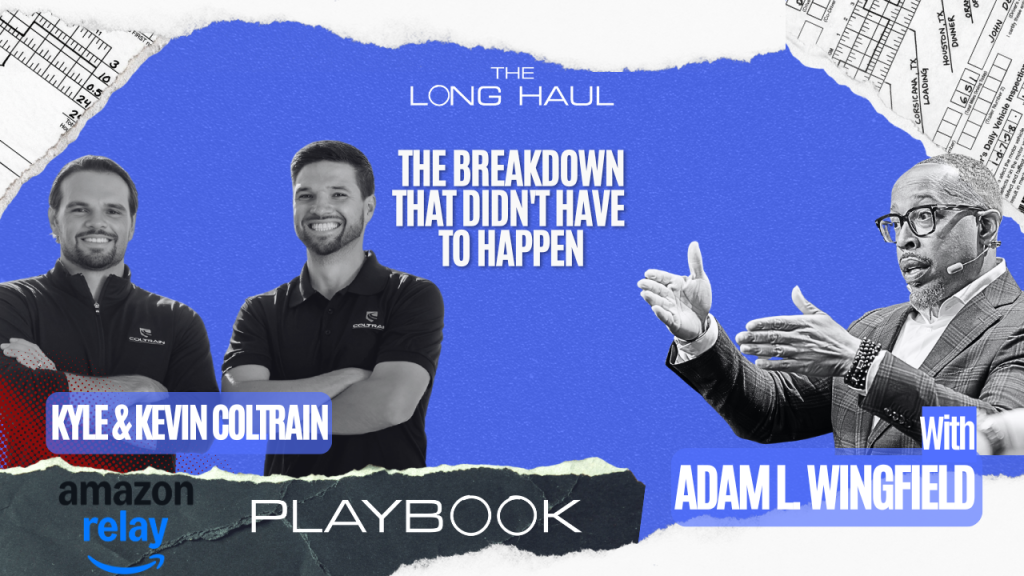
Coltrain Onsite featured on FreightWaves this week, profiled in an episode of Long Haul with Adam Wingfield called “The Breakdown That Didn’t Have to Happen.” The full story ran on FreightWaves on July 30, 2026. FreightWaves is one of the largest trade publications covering freight and trucking, and the piece put Kyle and Kevin Coltrain, the company’s co-founders, on record about what mobile maintenance can actually do in 2026 and what a fleet manager should ask before trusting any provider with a truck.
Why FreightWaves Featured Coltrain Onsite
Coltrain Onsite featured on FreightWaves is a notable moment for a company not yet a year old. The episode was hosted by Adam Wingfield on The Long Haul, a FreightWaves podcast built for small carriers and owner-operators. Wingfield brought Kyle and Kevin on together, a format the show uses only when the conversation earns it. The hour covered the company’s origin, what a properly equipped mobile unit can handle today, and how a carrier should evaluate any maintenance partner before handing over a truck. The piece ran under FreightWaves’ Playbook vertical, in its Equipment, Maintenance & Tech category, which focuses on operational decisions for small and midsize carriers rather than industry-wide trend pieces.
The Family Story Behind the Feature
Kyle and Kevin Coltrain grew up around mobile mechanic work. Their grandfather, Bob Dickinson, built one of the first mobile fleet maintenance companies in the country out of a small shop in Indianapolis in 1997, back when the entire service menu was oil changes and minor repairs and most of the job was explaining to fleet managers what mobile maintenance even meant. Coltrain Onsite Fleet Care is headquartered in Indianapolis today as well. Their father, Ted Coltrain, and their uncle, Mike Dickinson, ran the business as it scaled. Both brothers worked in it after college. Kyle, a former college football player at UCF who thought he was headed into coaching, started in field sales out of Tampa during years when most customers had never heard of mobile maintenance. Kevin managed regional operations across multiple markets.
Then the business changed hands, first bringing in outside investment, then becoming part of a much larger corporate operation. Kyle told FreightWaves that growth itself was never the issue. What concerned him was what happens to hiring and scheduling once growth becomes a quota. A manager told to add ten technicians a month will hire someone off a phone screen who says he can turn a wrench, and a mobile technician working alone at night or on a weekend does not have a buddy in the next shop bay to ask for help. Kevin made a related point about scheduling: push a technician to finish a four-hour job in two, and things get missed, not because anyone set out to do poor work, but because the clock was set wrong. Both brothers pointed to the same pattern across the industry as a whole: outside capital moving in, growth quotas following close behind, and quality slipping as a result.
Kyle and Kevin launched Coltrain Onsite Fleet Care in August 2025. Less than a year in, the company now runs about 70 mobile technicians across 15 states, largely east of the Mississippi plus Texas.
What FreightWaves Highlighted About Mobile Maintenance in 2026
Coltrain Onsite featured on FreightWaves also covered what a properly equipped mobile unit can handle in 2026, not just the company’s origin story. Coltrain’s trucks run a Miller Trailblazer 330 Air Pak, a combination welder, generator and compressor, which means welding and trailer body work happen in the yard instead of a shop bay. Kyle told FreightWaves that detail alone surprises most fleet managers he sits down with.
That equipment is part of why Coltrain handles roughly 95 percent of routine repairs and maintenance on site: engine diagnostics through a direct plug into the truck’s computer, DEF system and diesel particulate filter work, brakes down to shoes and drums, air conditioning, lighting, starters, alternators and radiators. The remaining 5 percent goes to a shop for two reasons. Opening an engine outdoors invites contamination, and pulling a motor without a shop’s lifting infrastructure is a safety risk. Catastrophic collision damage goes to a body shop for paint.
Kyle also walked through the economics fleet managers usually miss. Mobile rates run roughly on par with a quality shop, and the real gap opens up against quick-lube operations doing a five-point inspection and an oil change, where the up-front savings get paid back later. A five-point check typically covers oil, tire pressure, wiper blades, lights and belts, enough to keep a truck moving that day but well short of the DOT-level work Coltrain performs at every mobile stop: brakes down to shoes and drums, DEF and diesel particulate filter systems, and a full diagnostic scan through a direct plug into the truck’s computer. The gap between those two service levels is where deferred problems accumulate, and they tend to surface later as a breakdown rather than a line item on an invoice. A shop keeps business hours, so the truck sits idle during the hours it should be earning money. Someone has to drive it there and back, on the clock, or wait on it, and none of that shows up on the invoice.
Kyle Coltrain’s Advice for Vetting Any Provider
The conversation went further than Coltrain’s own capabilities. Asked what a small carrier should look for in any mobile maintenance provider, Kyle offered four checks that cost nothing to run. Ask for copies of brake and DOT inspector certifications before signing anything. Ask the local manager how many technicians he supervises. Coltrain caps that ratio at 10 to 15 per manager, and Kyle said he has seen ratios as high as 40 to 1 elsewhere. Ask how often that manager is actually in the field with his technicians and how to reach him directly. And ask how inspections get documented. Coltrain’s technicians timestamp and photograph every individual inspection point rather than signing a single sheet, so a passed inspection comes with proof, not just a sticker.
Coltrain Onsite Featured on FreightWaves: Why It Matters
Kevin’s point about downtime was the one worth sitting with. Most carriers feel the cost of an idle truck without ever calculating it, and the common workaround is buying spare units, a real fix with a cost of ownership all its own. Keeping every truck on the road through a tighter maintenance program is the cheaper version of the same insurance.
There’s a compliance angle too. The Department of Transportation can audit a carrier’s inspection records and request the certifications held by the technician who performed them. A carrier that collected those records up front has them on hand. A carrier that didn’t is calling a vendor mid-audit asking for a favor.
That’s the thinking behind Coltrain’s own mantra, Defend the Road. A loaded truck at highway speed isn’t a line item to optimize down to the last dollar. It’s family, coworkers and everyone else sharing that stretch of interstate, and Kyle’s summary to FreightWaves was direct: planned downtime is easier to manage and cheaper than unplanned downtime, and a wheel-off event or a roadside breakdown costs far more than any inspection ever will.
Watch the full conversation in the Long Haul podcast episode, “The Breakdown That Didn’t Have to Happen,” hosted by Adam Wingfield.
MORE ARTICLES
Coltrain Onsite Named an Official Sponsor of 2026 StaffDNA Cure Bowl
Best Young Diesel Tech 2026: Meet Coltrain’s 3 Nominees
